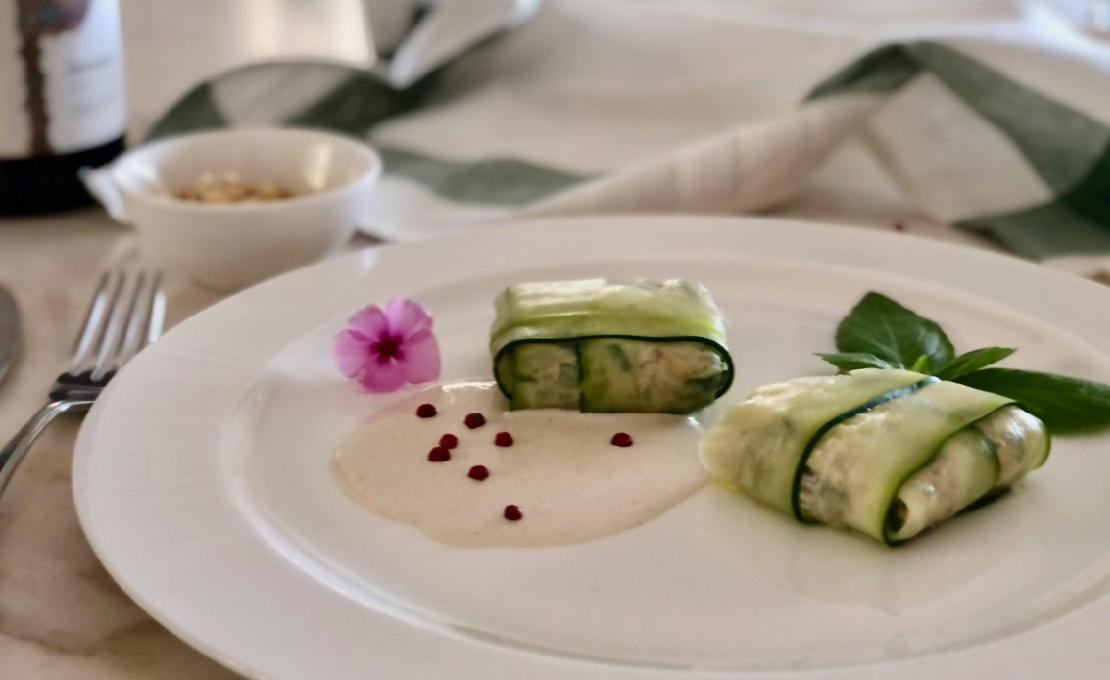
Is it possible to escape from the world while we cook? Concentration required by knife cuts to get uniform zucchini dice or the pause we make when tasting a sauce requires our full attention. But there is a step beyond escaping or relaxing when cooking. It is using the cooking session as a meditation exercise. This post and its companion recipe explore the techniques of Shōjin cooking.
In 2014 I was fortunate to attend the workshop Zen Cooking for Body and Mind in New York taught by the monk-cook Tanahashi Toshio. In the sessions, the principles of Shōjin Ryori, the cuisine of the Zen temples of Japan, were applied. Although our work focuses on Mediterranean cuisine, several of the recipes on this website (Tomato Tartare, Spelt Berries with Greens e.g.) are influenced by that experience. During the last months I have taken up the concept and techniques of Shōjin Cuisine to create a series of recipes connected to our culinary context.
In Japanese, the word shōjin (精進) means serenity. More exactly, it indicates the withdrawal from the profane world to find clarity and serenity. Shōjin Cuisine is part of the Zen meditation-in-action techniques and curiously it resonated in my mind when I heard words such as uncertainty, uneasiness or concern. Words uttered by friends, colleagues and neighbors who, like all of us, are going through these pandemic times the best way we can.
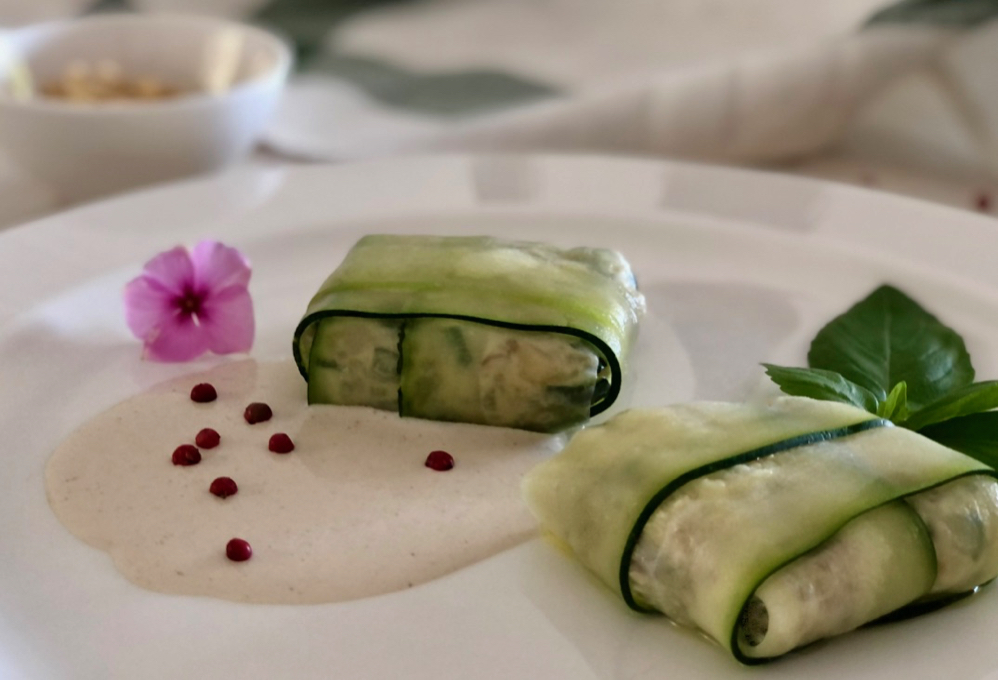
In our work we used the techniques of Shōjin cuisine, adapting them to local ingredients and the culinary tradition of the Mediterranean. In this first recipe, zucchini are wrapped in a sesame sauce, but instead of looking for a Japanese flavor profile, we have based it on Mediterranean tahini made with raw sesame, sea salt and lemon juice.
Zucchini Shōjin consists of small packets made with wrapped zucchini slices and stuffed with vegetables and nuts. Take a look at the main photo to see the final finish.
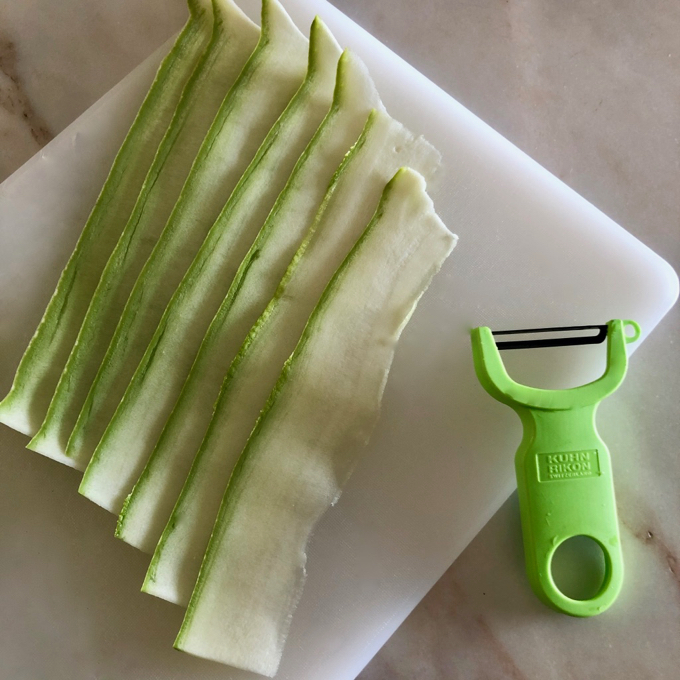
Preparation of ingredients involves delicate work that must be done thoroughly.
To achieve the clean finish we aim at we must cut the zucchini into longitudinal slices with a vegetable peeler. We need four sheets for each packet. They must be very thin and whole, without breaks or uneven areas.
We will keep all leftover trimmings to use in the filling. That is one of the principles of Shōjin cuisine: Zero waste.
We are going to steam the slices for three minutes, not one more, not one less.
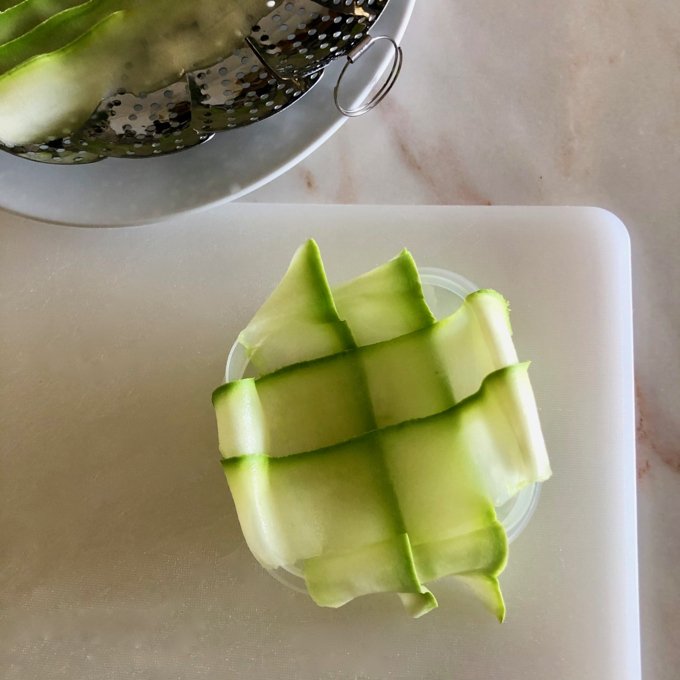 On a square mold of about 3-4 inches side we are going to place the already cooked sheets with care. Two at the bottom and two more on top placed perpendicularly. It is very important to place them overlapping one sheet with the other just half an inch so that the wrap is completely encased.
This is the more technical part since now we can fill the container with the vegetable mixture (see the details in the recipe), fold the sheets and unmold the package by turning upside down the container on the serving plate.
The result is a very delicate dish, with a serene and attractive presence. The creaminess of zucchini combines with the texture of the vegetables and the crunch of pine nuts. The sesame and lemon give the dish summery aromas and the flavor of pine nuts accentuates its Mediterranean character. It is a simple, almost austere dish that looks like a gift and generates gratitude. Frankly, I don’t know if you enjoy more making or eating it.

- 3 medium-sized zucchini
- 1 medium onion
- 6 portobello mushrooms or champignon or Shitake
- 1 tablespoon pine nuts
- Extra Virgin Olive Oil
- Sea salt
- For the Tahini Sauce
- 3 tablespoons raw sesame tahini (untoasted)
- 3 tablespoons water
- 1 tablespoon lemon juice
- ½ teaspoon Sea Salt
- Wash the zucchini and trim both tips. Cut the zucchini lengthwise into two pieces, removing a quarter of its thickness so that it shows a flat part. With a vegetable peeler, cut slices as thin as possible from the largest piece. They should be whole, with the flat side of the zucchini intact (see photo). Cut 16 sheets in total. Reserve all the leftovers from this operation for the filling.
- Put the sheets to steam for three minutes. Drain and reserve.
- To prepare the filling, chop the leftover zucchini, onion and mushrooms into ¼ inch cubes.
- Put a tablespoon of oil in a pan and sauté over medium heat for five minutes. Add the pine nuts and sauté for two or three more minutes. Reserve the mixture in a bowl.
- Prepare the Tahini sauce by combining all the ingredients in a blender and process them until you get a thick but liquid sauce.
- Add two to three tablespoons of the sauce to the bowl and combine with the mixture to coat everything. Taste the mixture and rectify the salt if necessary. It is very important that the final mixture does not leak liquid. The sauce should be thick and added little by little to the vegs.
- Place two slices of zucchini mounted one on top of the other half an inch on a mold or square container (3-4 inches side). Lay another two sheets perpendicular (see photo).
- Fill with the mixture up to the top and fold the sheets forming upside-down little packets.
- Unmold by inverting the mold directly on the plate in which you are going to serve.
- Garnish with two tablespoons of Tahini sauce and pink peppercorns, roasted pine nuts or sesame seeds.
 Toni and Javi are active daily cooks who explore the beauty of natural cooking. Our mission is to bring flavor and excellence to healthy eating!







Leave a Reply